
One of the most heartwarming experiences for Filipinos abroad is bumping into a fellow Filipino and instantly feeling a sense of kinship. The first question that often pops up is: “Saan kayo sa Pilipinas?” or “Where are you from in the Philippines?” Bonus points if you’re from the same province and speak the same dialect — then the conversation seamlessly switches to your native tongue.
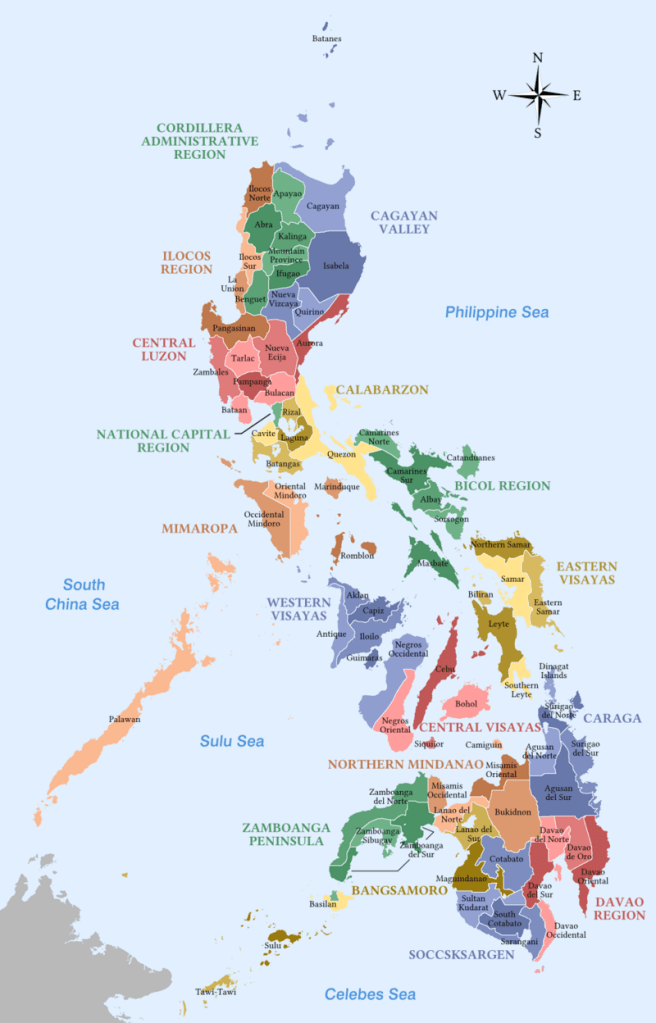
Provinces of the Philippines
Both my parents are from Macabebe, Pampanga (they were practically neighbours, but that’s a love story for another day!). Growing up, I would see their eyes light up whenever they made a new Filipino friend who happened to also be Kapampangan. Hearing them switch effortlessly to Kapampangan, sharing stories, and reminiscing about familiar places and traditions… There was an immediate sense of unity and shared history, as if they had found a piece of home away from home.
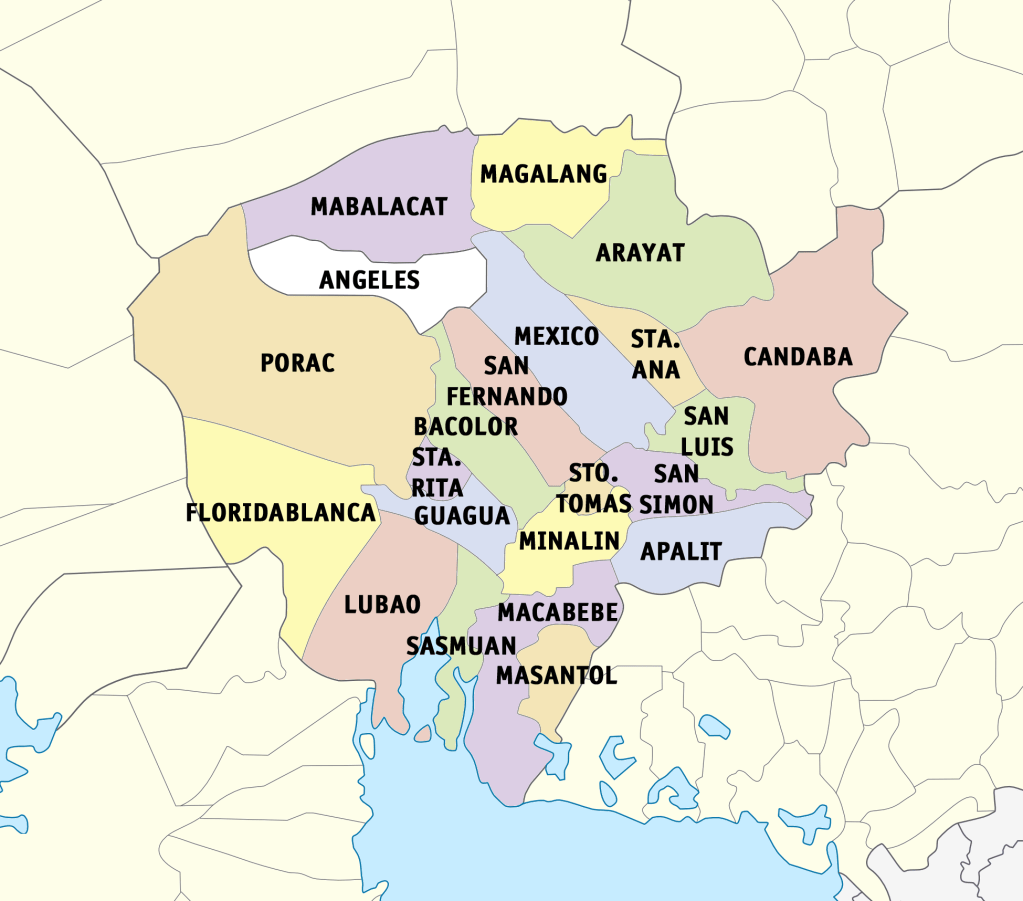
Province of Pampanga
Pampanga is known for its rich history, festivals, giant lanterns, and of course, the good food (they don’t call Pampanga the culinary capital of the Philippines for nothing!). But if you ask me, one of things that makes our balen so beautiful is the language.
The Kapampangan language was formally called Amánung Sísuan, translating to the “breastfed or nurtured language.” The word Kapampangan is derived from the root word pampang, meaning “riverbank,” as the province of Pampanga in the Philippines is known for its riverbanks and fertile lands. Kapampangan is also rich in cultural heritage, and full of unique expressions. Many words cannot be directly translated to Tagalog or English. Kapampangans even have a formal sentence structure, grammar, vowels, and suffixes.
As someone deeply connected to my roots, I’ve made it a priority to learn more Tagalog and, most especially, more of the Kapampangan dialect. Witnessing my parents find fragments of home in chance encounters with fellow Kapampangans has inspired me to seek that same connection. This Filipino Heritage Month in Canada, I’m especially motivated to delve deeper into my roots.
So here are some of my favourite Kapampangan words that don’t exist in English!
1. Aslag
Aslag is an old word for “light,” or “something bright,” and literally translates to “light from a heavenly body” or “a place where the sun rises.” Often, we use it to describe a new beginning or something that’s flourishing. It’s the soft, warm glow of dawn that brings a sense of hope, and a reminder that life is a story so full of new chapters.
2. Bale
Bale is the word Kapampangans use to say the word “home.” Now I know what you’re thinking: the word home already exists in English. But what I think makes bale so special is that it’s a root word we find in so many places and people:
Bale: home
Balen: town
Kabalen: townmate
Kasiping bale: neighbor
Mikibale: house owner
Bale reminds me that a lot of times, home is not just a place. It’s the people that make it feel like home.
3. Ganaka
Ganaka is about kindness and thoughtfulness, and remembering in a caring way. Whenever my parents were angry because I wouldn’t answer their calls when I’d be out late with my friends, they’d say, “Emu balu ing pingaganakan!” or in English, “You don’t know how worried I felt!”
Aganaka: I remember
Ganakan: to consider, to remember, to suggest
Maganaka: kind, thoughtful
Paganaka: to give a reminder
Pigaganakan: to worry, troubled, anxious
Ganaka isn’t just about remembering. It’s about considering how our words and actions impact others, and helping us stay close to those we care about.
4. Lugud
My most favourite Kapampangan word would probably be lugud, meaning love. Sure, the word love exists in practically all languages. But for Kapampangans, lugud means more than just affection. From the word “lugud,” we have “kaluguran,” which can have multiple meanings depending on how it’s said:
Ka-luguran: friend
Kalugu-ran: sweetheart, someone you love
Kaluguran daka: I love you
So if you’re learning your first word in Kapampangan, let it be lugud. Lugud highlights how Kapampangans see relationships: that love is an all encompassing love which isn’t limited to romantic partners, but expressed to all loved ones including friends and family.
5. Ne
Ne is an all-purpose interjection that has no counterpart in other Filipino languages and no equivalent in English. Its closest English equivalent is probably “okay” or “all right” and is used only for emphasis or reiteration, as in “Ika na mu, ne?” or “You be the one, okay?” But it’s also different from the Tagalog expression “di ba?” or “is it not?” in English, which is “ale?” in Kapampangan. Kapampangans relish using ne, because it’s a term of endearment and instant recognition.
And isn’t it amazing how a single syllable can turn strangers into friends? You hear ne in a crowd and you know there’s a Kapampangan in the room!
6. Siklod
If you’re familiar with the Filipino mano honouring-gesture, this is the Kapampangan word equivalent.
When you enter someone’s home or see our older relatives, you bow towards the hand of an elder and press your forehead on their hand, as a sign of respect and as a way of requesting a blessing. And that is how you siklod. It’s a gesture of deep respect and cultural significance, definitely not directly translatable to a single English word.
7. Tau
Another one of my favourites is tau, with so many different meanings depending on the tone:
Tau: celebrate, banquet
Tau: person, human being
Mitau: in a relationship, together romantically
When it’s someone’s birthday or a special occasion, Kapampangans will ask, “Mag tau tamo?” which translates to, “Are we going to celebrate?” In a Kapampangan sense, celebrating implies people and community, which implies cooking and then sharing a meal altogether. And if you were to bring a plus-one to the event, someone might ask you, “Tau me?” or “Is he or she your boyfriend or girlfriend?” to which you might answer, “Tau ke!” which literally translates to “My person!”
And in Kapampangan culture, it all boils down to tau: whether it’s celebrating together, gathering as people, or being in a relationship, it’s about sharing these moments with others.
8. Tula
Tula holds various meanings, from joy and happiness, to being funny or causing laughter. If someone says a funny joke, one might say “Katula ku keka!” or “You make me laugh!” And if it were your graduation, the elders would say they were happy for you: “Matula la keka deng matua.” And how beautiful it is that tula reminds us of the simple joys, the blessings, and the laughter that bring warmth to our lives.
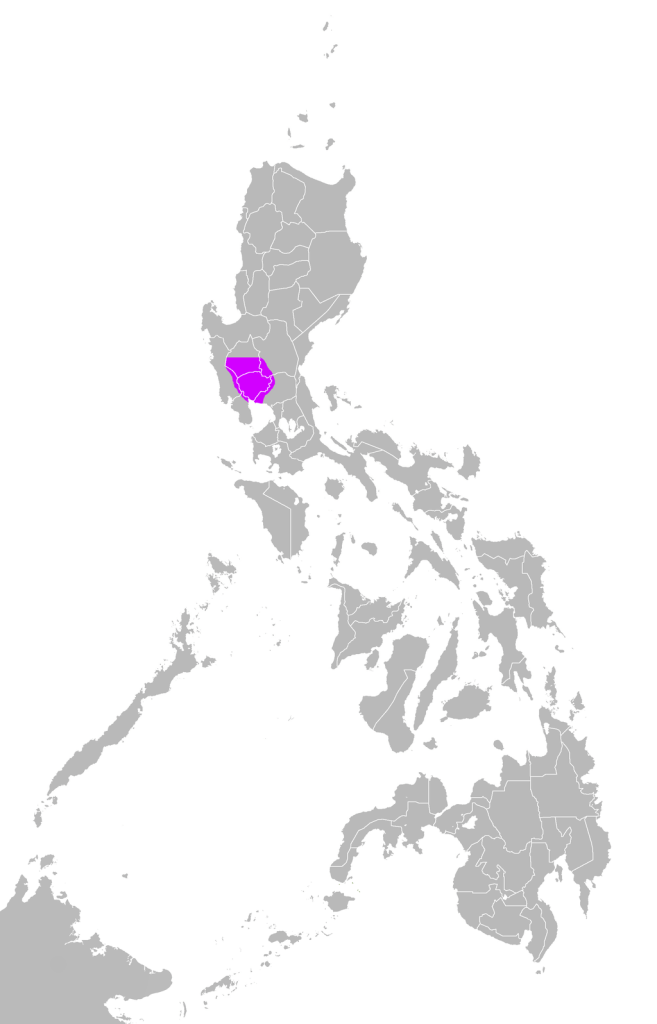
Areas where Kapampangan is spoken in the Philippines
Growing up, my grandmother, or apu as we say in Kapampangan, always spoke fondly of Pampanga, claiming its people were some of the kindest, most caring, most compassionate, most hospitable, most family-centered, most community-oriented, and most united people you’d ever meet. I always thought it was a bit biased, and maybe even boastful. But the more words I discover, the more I wonder if perhaps apu was onto something after all…
So how about you? If you’re of Filipino descent, “Saan ka sa Pilipinas?” And what are your favourite words?
Celebrating our heritage and language helps keep our culture alive, and connects us to our roots. So this month, take the time to learn something new about the Philippines, and share its beauty with others. It’s a great way to feel closer to home and to each other.
Happy Filipino Heritage Month, Canada!
 The Lilac Blog